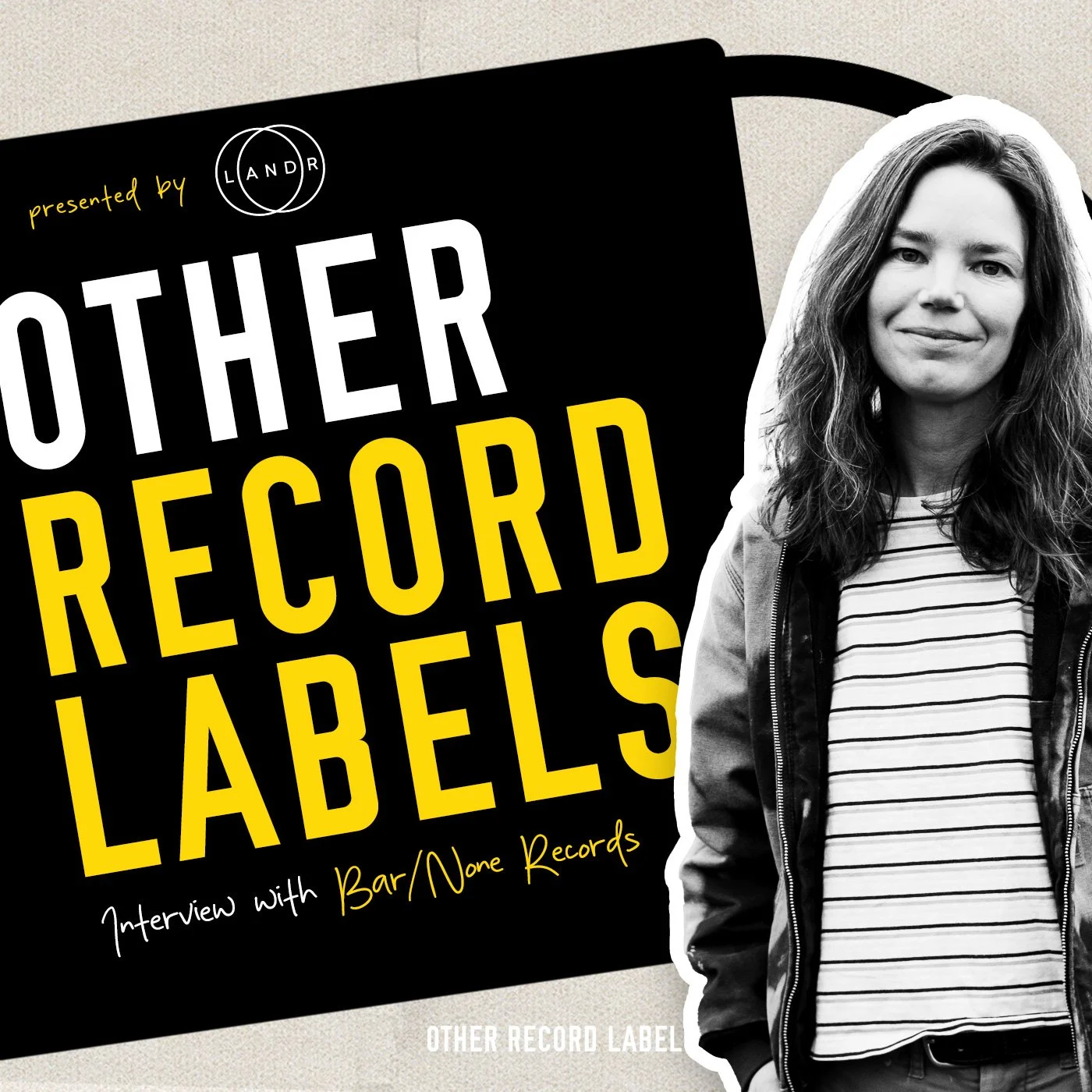
Bar/None Records (Record Label Interview)
“If I’m not listening to that record on repeat on my own, not for work… don’t release it.”
🔗 Check out Bar/None Records
LISTEN TO THE PODCAST EPISODE
Everyone talks about starting a record label.
Almost no one talks about what happens after.
In my recent conversation with Emmy Black—who just took over Bar/None Records, a label with nearly four decades of history—I was reminded of something important:
The real challenge isn’t building a label. It’s sustaining one.
And not just sustaining it—but evolving it, protecting it, and growing it without losing what made it special in the first place.
Here are 4 key lessons from our conversation that every indie label owner needs to understand.
1. You’re Not Building a Label—You’re Building a Catalog
Most indie labels start as passion projects.
But over time, they become something else entirely:
A body of work. A catalog. A reputation.
Bar/None Records has released music from over 100 artists since its founding in 1986.
That’s not just output… that’s legacy.
When you think this way, your decisions change:
You think long-term, not just release-to-release
You care more about consistency than quick wins
You prioritize identity over opportunity
IMPORTANT: Ask yourself: If someone discovers your label in 10 years… what do they hear?
2. Taste Is Still Your Greatest Asset
In a world of algorithms and playlists, it’s easy to think taste doesn’t matter anymore.
It does.
More than ever.
Independent labels don’t win by scale. They win by selection.
Your advantage isn’t access…it’s curation.
The best labels:
Say “no” more than they say “yes”
Build a recognizable sonic identity
Become trusted filters for fans
IMPORTANT: Your job isn’t to release more music.
Your job is to release the right music.
3. Relationships Are the Real Infrastructure
We often think of label infrastructure as:
Distribution
Marketing tools
Funding
But the real infrastructure is relational:
Artist trust
Long-term partnerships
Reputation in the ecosystem
Bar/None didn’t last decades because of tactics.
It lasted because of relationships.
And that’s the part that doesn’t scale easily.
IMPORTANT: Every email, every release, every interaction is building (or eroding) your reputation.
4. Evolution Without Losing Identity
Taking over an existing label introduces a tension:
How do you move forward… without disconnecting from the past?
This applies to every label, not just legacy ones.
Because every label eventually faces this:
New audience vs. existing audience
New sound vs. established identity
Growth vs. coherence
The goal isn’t reinvention.
The goal is alignment.
IMPORTANT: Continue to evolve the execution, while protecting the identity.
Listen to older episodes of our podcast, check out our free resources for independent record labels, or learn how to start your own record label.