The Risks of AI Music Contracts
Read This Before You Use AI For Your Music Law Needs

Why are labels so tempted by AI contracts?
Let’s be honest about what’s driving this:
Cost – legal fees feel intimidating when margins are tight
Speed – AI is instant; lawyers are not
Comfort – asking a chatbot feels less scary than emailing an attorney
DIY culture – we’re used to figuring things out ourselves
All of that is completely understandable.
But the problem isn’t why people are doing this.
The problem is what they don’t realize they’re signing away.

5 Reasons Why AI Legal Assistance is Dangerous for Record Labels…
1. AI Sounds Confident Even When It’s Wrong
One of the most dangerous things about AI-generated contracts is that they often sound legitimate.
Clean formatting.
Formal legal language.
Confident tone.
But AI systems are known to:
Invent legal concepts
Reference laws or cases that don’t exist
Omit critical clauses without warning
These are often called hallucinations—and unless you already know what should be there, you won’t know what’s missing.
If a contract is missing something important, you don’t get an alert saying “Hey, this clause should exist.”
You just don’t find out until there’s a dispute.
At that point, it’s too late.
2. Missing Clauses = Real-World Consequences
Cassandra sees AI-generated contracts come across her desk regularly. The patterns are consistent:
Jurisdiction clauses missing
Term lengths unclear
Rights not clearly defined
Loopholes everywhere
Jurisdiction alone is a massive issue.
If you don’t specify where disputes are handled, you could find yourself:
Forced into court in another country
Subject to unfamiliar laws
Paying far more in legal fees than you ever saved
AI doesn’t understand the realities of international music relationships—and modern labels are constantly working cross-border.
3. There Is No Accountability With AI
This is the part that really stuck with me.
If an attorney drafts something incorrectly, they are accountable.
There are professional obligations.
There is liability.
If AI drafts something incorrectly?
There is no recourse.
You can’t:
Ask for clarification
Demand corrections
Hold anyone responsible
And once you sign a contract, it doesn’t matter who drafted it.
If you’re an adult and you sign it, you’re bound by it.
“I didn’t understand it” is not a defence.
4. No Attorney-Client Privilege
Anything you type into AI tools is not protected.
That means:
Your prompts
Your explanations
Your strategy notes
…could potentially be subpoenaed in a future dispute.
When you speak to an attorney, those conversations are protected.
When you speak to AI, they are not.
Most people don’t even realize this risk exists.
5. What This Says to Artists You’re Trying to Sign
There’s another angle here that indie labels don’t always think about.
Artists don’t need labels anymore.
So when they do consider one, they’re asking:
Do these people know what they’re doing?
Can I trust them with my catalog?
Are they professional?
Sending an artist a contract that is clearly AI-generated doesn’t inspire confidence.
“If a label can’t even invest in a proper contract, what does that say about how they’ll handle promotion, royalties, or long-term care for the artist?”
That perception matters more than ever.
So… Is AI Ever Okay to Use?
Yes. Absolutely.
Just not as the final authority.
Here are smart ways labels and artists can use AI responsibly:
✔️ Good Uses
Learning about different deal structures
Generating questions for your attorney
Summarizing a contract before sending it to a lawyer
Organizing your thoughts before writing an email
Spotting possible red flags (not final answers)
❌ Risky Uses
Drafting contracts from scratch
Replacing legal review
Trusting AI to know what’s “standard”
Feeding confidential details into prompts

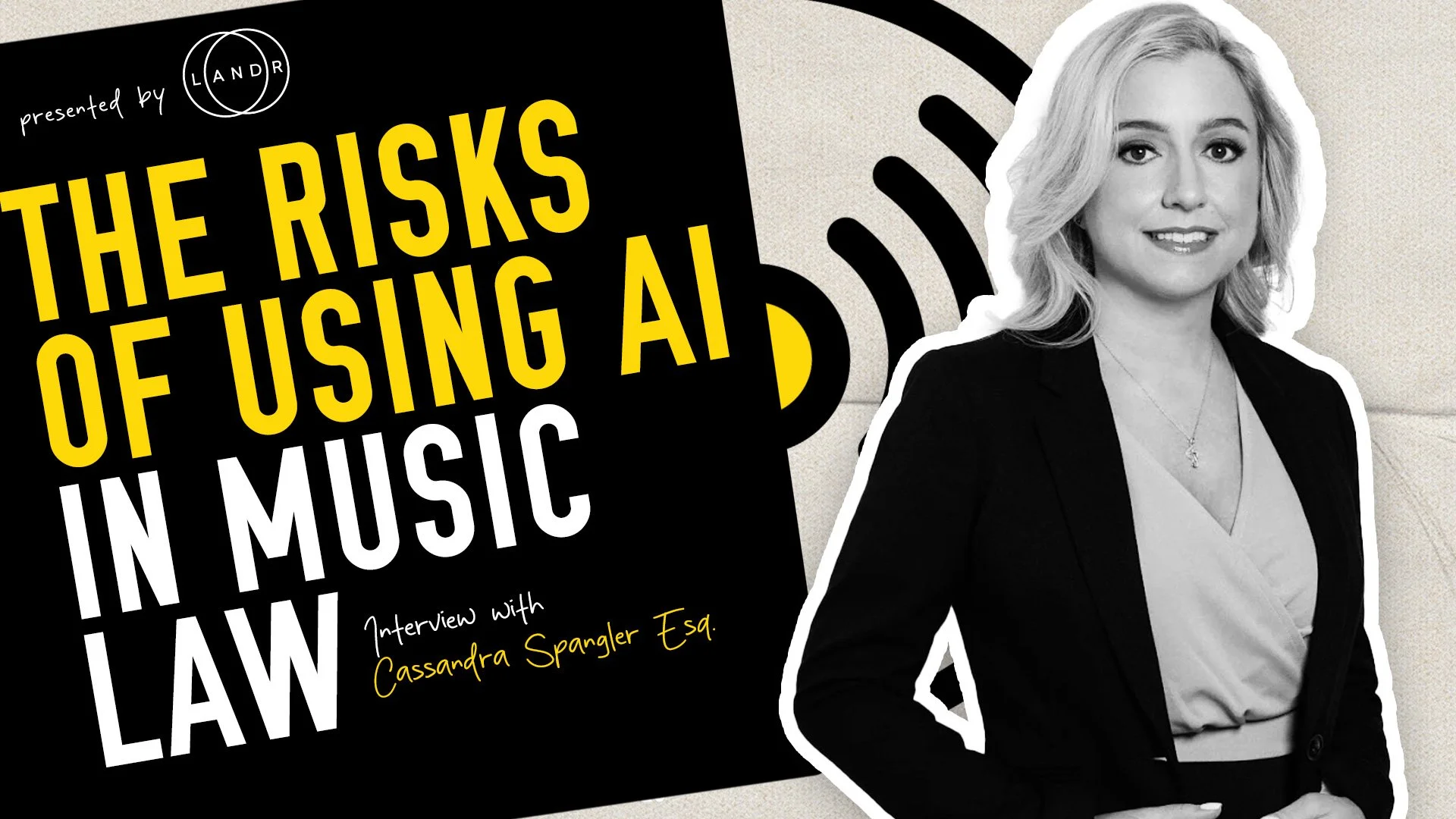
WATCH THIS EPISODE
and catch other videos on our YouTube Channel
Summary:
Using AI to support your thinking is smart.
Using it to replace professional legal guidance is a gamble.
Just make sure you’re not letting convenience write contracts that follow you for years.
Meet Cassandra!

Hello!Cassandra Spangler, Esq. is a seasoned music and entertainment attorney based in New York, licensed to practice law in the State of New York and representing creators and companies across the music industry since 2010. She works with artists, producers, songwriters, independent labels, publishing companies, managers, and other industry professionals on the full range of legal issues that come up throughout a music career — from contract negotiation and drafting to copyright and trademark registration, licensing, and business formation.
Before transitioning into law, Cassandra spent years working within the music business — at independent record labels, a booking agency, and in music retail — and she has also been an independent artist for more than 25 years. That unique background gives her a deep understanding of both the creative and business sides of the industry, and helps her advocate for clients with empathy and real-world perspective.
She has also served as an Adjunct Professor in music business and business law at respected institutions, teaching industry professionals and students about the legal landscape of music.
Her legal practice covers everything from traditional record and publishing deals to emerging digital concerns, and she regularly helps clients navigate complex rights issues, royalty disputes, and strategic business structuring.
Music Law Glossary
Agreement / Contract
A written document that legally defines who does what, who owns what, who gets paid, and what happens if things go wrong. If you sign it, you’re bound by it — even if you didn’t write it or fully understand it.
Advance
Money paid upfront (often by a label or distributor) that is usually recoupable, meaning it’s paid back from future earnings before anyone else gets paid.
Attorney-Client Privilege
Legal protection that keeps conversations between you and your lawyer confidential. This does not apply to AI tools or online contract generators.
Copyright
Legal ownership of creative work. In music, this usually refers to:
Composition (songwriting)
Sound recording (the master)
These can be owned, shared, licensed, or transferred.
Exclusivity
A clause that prevents an artist from working with other labels, distributors, or partners during the contract term. This can seriously limit future opportunities if not carefully defined.
Jurisdiction / Governing Law
Specifies where legal disputes will be handled and which laws apply. If missing, you could be forced into court in another state or country.
Loophole
Unclear or missing language that allows one party to avoid obligations or escape the contract entirely. AI-generated contracts often contain these.
Master Recording (Masters)
The actual recorded version of a song. Ownership of masters is one of the most important — and most misunderstood — issues in music contracts.
Recoupment
The process by which a label or distributor recovers expenses (advances, marketing, manufacturing, etc.) from revenue before the artist receives royalties.
Royalty
A percentage of income paid to the rights holder from sales, streams, licensing, or other exploitation of music.
Term
The length of time the contract is active. This can be tied to years, albums, or specific deliverables.
Territory
The geographic area where rights apply (e.g., Canada only, North America, Worldwide). Global rights are common — but not always necessary.
Work Made for Hire
A legal concept where the creator does not own the copyright — the hiring party does. This is extremely important to understand before signing anything.

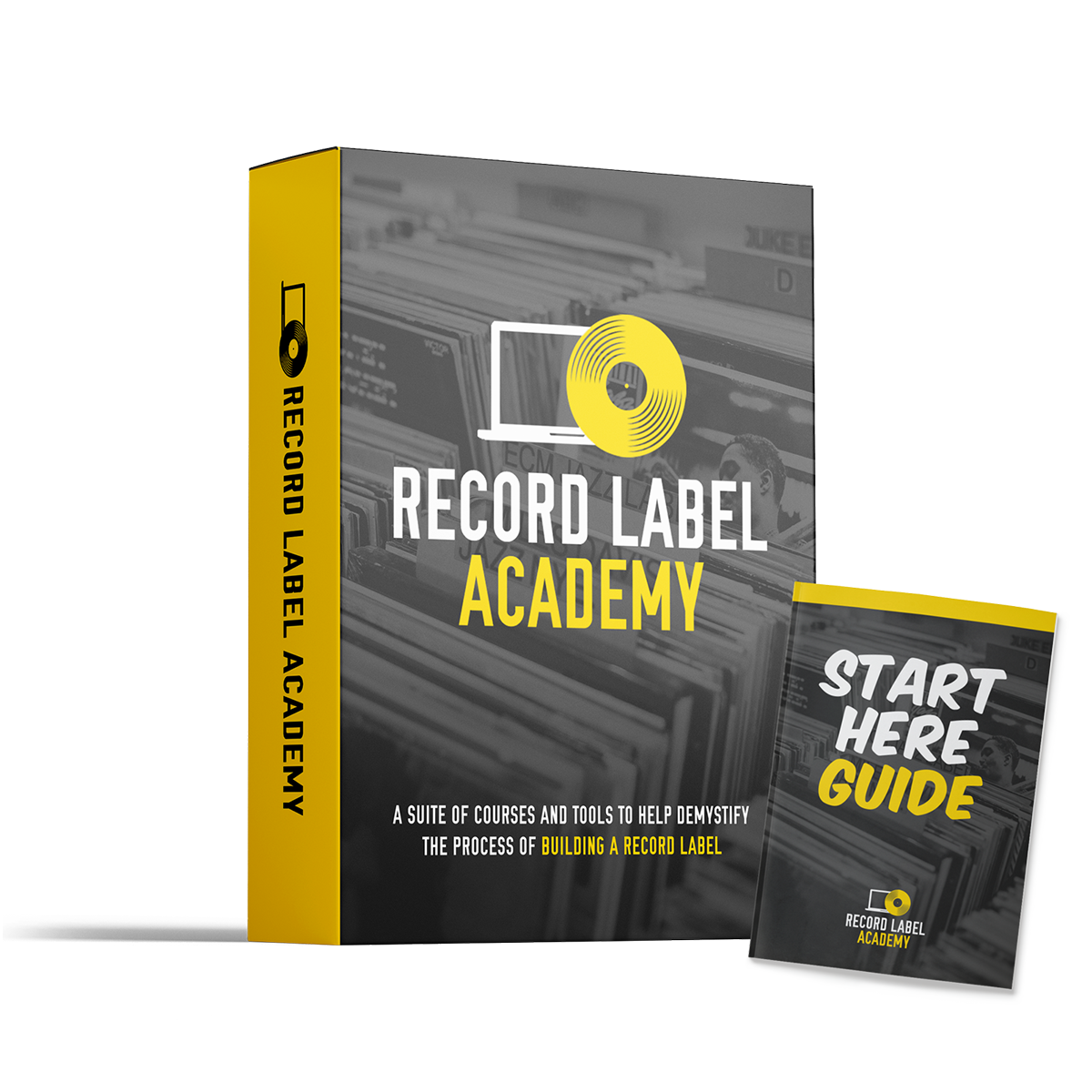
RECORD LABEL
ACADEMY
The Complete A to Z of Building and Growing an Independent Record Label.

BEST VALUE
*
BEST VALUE *
RECORD LABEL
ACADEMY
Instant Lifetime Access to all our courses, books, and templates!
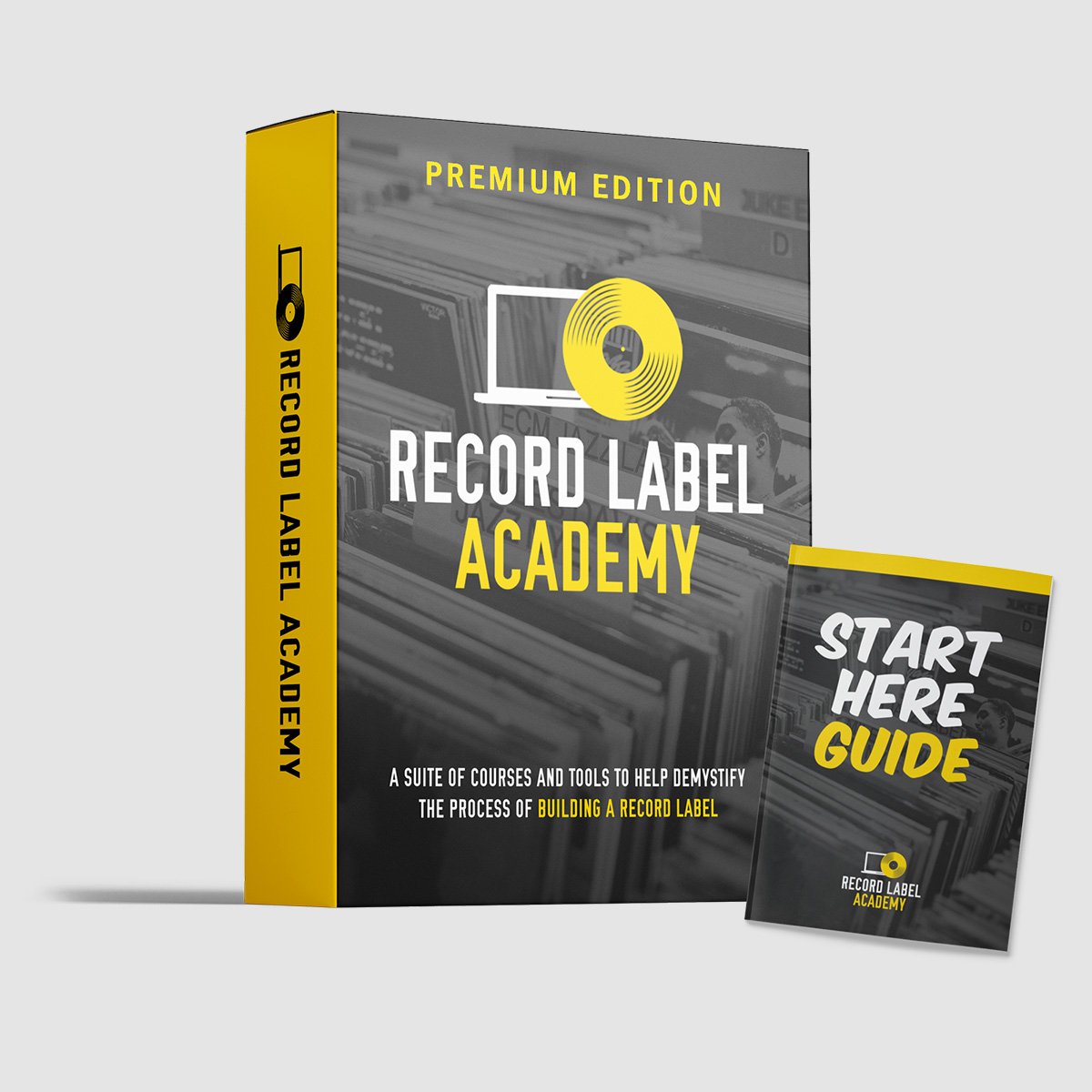
Starting a record label business is exciting, but also overwhelming…
Where should you begin? What is essential and what is a waste of time?
Our courses and tools are here to help demystify the process, and to provide you with a step-by-step plan!
Included in The Record Label Academy - Premium Edition
Your “Start Here” Guide
How to Start a Record Label (Online Course)
Marketing for Record Labels (Online Course)
Profitable Record Label (Online Course)
Record Label Decision Tool (Online Course)
New Release Blueprint (Online Course)
10x Micro Courses (Sync Licensing, Music Publishing, Bandcamp Basics, Spotify Basics, Pressing Vinyl, Email Marketing, Income Generating, Social Media, Artwork + Design, Web Design)
8x Micro Books (Email Marketing, Music Publishing, Sync Licensing, Web Design, Artwork + Design, Spotify Basics, Bandcamp Basics, Pressing Vinyl)
Record Label Business Plan Template - Premium Version
How to Start a Record Label (eBook)
Marketing for Record Labels (eBook)
Why We (Still) Need Record Labels (eBook)
Don’t listen to bad advice, don’t get overwhelmed with information, and don’t waste money!
Tackle one music industry topic at a time until you’ve built a record label that is bespoke to who you are as a music curator and fan!
A record label that allows you to earn a living telling people about great music!
Let’s get started!
-
How to Start a Record Label (Online Course)
Record Label Marketing Strategies (Online Course)
Record Label Decision Tool (Online Course)
Profitable Record Label (Online Course)
All 10 Micro Courses
All 8 Micro eBooks
How to Start a Record Label (eBook)
Record Label Marketing Strategies (eBook)
Tons of bonus templates and extra resources
RECORD LABEL
ACADEMY
Instant Lifetime Access to all our courses, books, and templates!
Starting a record label business is exciting, but also overwhelming…
Where should you begin? What is essential and what is a waste of time?
Our courses and tools are here to help demystify the process, and to provide you with a step-by-step plan!
Included in The Record Label Academy - Premium Edition
Your “Start Here” Guide
How to Start a Record Label (Online Course)
Marketing for Record Labels (Online Course)
Profitable Record Label (Online Course)
Record Label Decision Tool (Online Course)
New Release Blueprint (Online Course)
10x Micro Courses (Sync Licensing, Music Publishing, Bandcamp Basics, Spotify Basics, Pressing Vinyl, Email Marketing, Income Generating, Social Media, Artwork + Design, Web Design)
8x Micro Books (Email Marketing, Music Publishing, Sync Licensing, Web Design, Artwork + Design, Spotify Basics, Bandcamp Basics, Pressing Vinyl)
Record Label Business Plan Template - Premium Version
How to Start a Record Label (eBook)
Marketing for Record Labels (eBook)
Why We (Still) Need Record Labels (eBook)
Don’t listen to bad advice, don’t get overwhelmed with information, and don’t waste money!
Tackle one music industry topic at a time until you’ve built a record label that is bespoke to who you are as a music curator and fan!
A record label that allows you to earn a living telling people about great music!
Let’s get started!
-
How to Start a Record Label (Online Course)
Record Label Marketing Strategies (Online Course)
Record Label Decision Tool (Online Course)
Profitable Record Label (Online Course)
All 10 Micro Courses
All 8 Micro eBooks
How to Start a Record Label (eBook)
Record Label Marketing Strategies (eBook)
Tons of bonus templates and extra resources
Helpful Articles for Record Labels
-
10 Steps to Planning Your New Release
50 Reasons Why You Should Start a Record Label
How Fans Can Support Record Labels
How Many Releases Per Year is Ideal?
How to Register Your Record Label
How to Submit Your Music to Record Labels
How to UNSTUCK your record label
Leveraging the Power of Lead Time
Record Store Day
Social Media Strategies & Solutions
Social Media Strategies & Solutions
The 4 Attributes of a Great Record Label
Why Artists Need a Record Label
Why Do We Release Music on Fridays?
How to Make a Business Plan
Record Contract Template
How to Start a Record Label
Branding & Album Artwork
Releasing Music on Vinyl

Music Publishing for Labels
How to Make Cassette Tapes
Bandcamp Best Practices

Other Record Labels Podcast
Featuring interviews with…